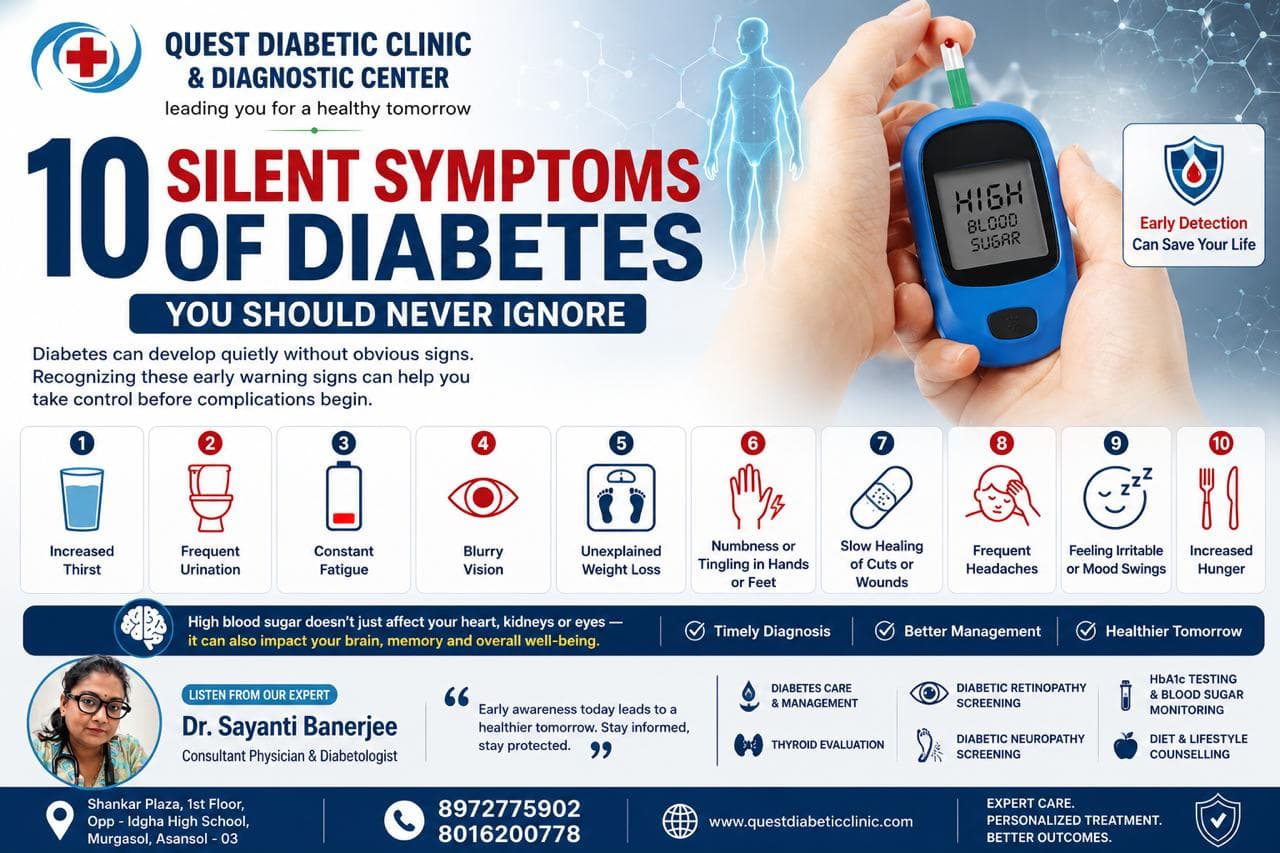
10 Silent Symptoms of Diabetes You Should Never Ignore
- Meta Title: 10 Silent Symptoms of Diabetes You Should Never Ignore | Quest Diabetic Clinic Asansol
- Meta Description: Learn the 10 silent symptoms of diabetes that often go unnoticed. Early diagnosis prevents complications. Consult Dr. Sayanti Banerjee, top Diabetologist in Asansol.
- Keywords: Diabetologist in Asansol, Diabetes Clinic Asansol, Diabetes Symptoms, Early Signs of Diabetes, HbA1c Test Asansol, Diabetes Treatment Asansol, Blood Sugar Test, Prediabetes, Diabetes Screening, Quest Diabetic Clinic.
Diabetes often develops gradually. In fact, millions of people live with high blood sugar for months—or even years—without realizing it. Because the early warning signs can be incredibly subtle, diabetes is frequently dubbed a "silent killer."
Recognizing these early signals is crucial. Left unchecked, chronic high blood sugar can lead to severe, long-term complications affecting your eyes, kidneys, heart, nerves, and brain.
If you or a loved one notices any of the following 10 warning signs, it is time to consult a qualified diabetologist and get your blood sugar checked.
10 Silent Symptoms of Diabetes
1. Increased Thirst (Polydipsia)
Feeling like you can’t drink enough water? Persistent, unquenchable thirst despite drinking fluids throughout the day is a classic sign that your body is trying to flush out excess sugar.
2. Frequent Urination (Polyuria)
If you find yourself making unusually frequent trips to the bathroom—especially waking up multiple times during the night—your kidneys might be working overtime to filter and excrete the surplus glucose from your blood.
3. Constant Fatigue
Do you feel chronically exhausted even after a full night's sleep? When you have diabetes, your cells cannot efficiently absorb glucose from the bloodstream to use for energy, leaving you feeling constantly drained.
4. Blurred Vision
High blood sugar levels can pull fluid from the lenses of your eyes, impacting your ability to focus. While this temporary blurring can resolve once sugar levels stabilize, prolonged high blood sugar can cause permanent damage to the retina.
5. Unexplained Weight Loss
Dropping pounds without changing your diet or exercise routine isn't always good news. When your body can't convert glucose into energy, it panics and starts burning fat and muscle for fuel, leading to sudden weight loss.
6. Tingling or Numbness
Early nerve damage (diabetic neuropathy) often manifests as a "pins and needles" sensation, burning, or numbness in the hands and feet.
7. Slow-Healing Wounds
Have a cut, scrape, or bruise that seems to take weeks to heal? High blood glucose impairs blood circulation and dampens your body's natural immune response, delaying the skin's ability to repair itself.
8. Frequent Infections
Diabetes weakens the immune system's defenses, making you more susceptible to illnesses. Recurring skin infections, urinary tract infections (UTIs), or yeast/fungal infections are common red flags.
9. Increased Hunger (Polyphagia)
Even if you are eating well, you might feel a constant urge to eat. Because the glucose isn't reaching your cells properly, your muscles and organs signal your brain that they are still "starving."
10. Brain Fog & Memory Problems
Fluctuating blood sugar levels don't just affect the body—they affect the mind. Poorly managed diabetes can lead to cognitive fatigue, difficulty concentrating, and occasional memory lapses.
Who Should Get Tested?
Diabetes can affect anyone, but screening is highly recommended if you are an adult above 35 years or have any of the following risk factors:
- Being overweight or obese
- A family history of diabetes
- High blood pressure (Hypertension)
- Polycystic Ovary Syndrome (PCOS)
- A history of gestational diabetes (diabetes during pregnancy)
- A sedentary lifestyle with little to no physical activity
How Diabetes is Diagnosed
At a specialized clinic, diagnosing diabetes is quick and precise. The most common diagnostic evaluations include:
- Fasting Blood Sugar (FBS): Measures blood glucose after an overnight fast.
- Postprandial Blood Sugar (PPBS): Measures blood glucose exactly two hours after a meal.
- HbA1c Test: Provides an average of your blood sugar levels over the past 2 to 3 months.
- Oral Glucose Tolerance Test (OGTT): Measures the body's ability to clear glucose from the blood.
- Continuous Glucose Monitoring (CGM): A modern wearable device that tracks glucose levels 24/7 for deeper insights.
Simple Ways to Reduce Your Risk
The good news is that type 2 diabetes and prediabetes can often be managed or even prevented with proactive lifestyle choices:
- Manage your weight: Losing just 5% to 7% of your body weight can make a massive difference.
- Stay active: Aim for at least 150 minutes of moderate exercise (like brisk walking or cycling) each week.
- Eat mindfully: Build your meals around high-fiber foods, lean proteins, and balanced portions.
- Cut the sugar: Strictly limit sugary beverages, sodas, and ultra-processed foods.
- Prioritize rest & stress management: Aim for 7–8 hours of quality sleep nightly, as chronic stress elevates blood sugar.
- Get screened: Don't wait for severe symptoms to appear; schedule routine checkups.
Why Choose Quest Diabetic Clinic & Diagnostic Centre?
When it comes to managing metabolic health, comprehensive care is everything. Quest Diabetic Clinic in Asansol offers an all-in-one approach to diabetes care. Under the expert guidance of Dr. Sayanti Banerjee, our clinic provides specialized services including:
- Advanced HbA1c and glucose testing
- Continuous Glucose Monitoring (CGM) setups
- Diabetic Retinopathy (eye) and Neuropathy (nerve) screenings
- Thyroid evaluations
- Personalized diet and lifestyle counseling
Frequently Asked Questions (FAQs)
Q1. Can diabetes develop without any symptoms at all?
Yes. Millions of individuals live with prediabetes or early-stage type 2 diabetes without exhibiting any obvious physical signs. This is why regular routine screenings are so critical.
Q2. Is tiredness always a definitive sign of diabetes?
No. Fatigue can be caused by many issues, including stress, poor sleep, or vitamin deficiencies. However, if your fatigue is persistent and accompanied by symptoms like frequent urination or excessive thirst, you should be evaluated.
Q3. Can prediabetes be reversed?
Absolutely. Diagnosing prediabetes is an opportunity. Through deliberate dietary changes, weight loss, and regular physical activity, you can delay or completely prevent it from progressing to type 2 diabetes.
Q4. How often should I check my blood sugar?
It varies. Your testing schedule depends entirely on your personal risk factors, age, and whether or not you have already been diagnosed. A qualified doctor can map out the ideal schedule for you.
Q5. When should I book a consultation with a diabetologist?
You should see a specialist immediately if you experience any of the 10 symptoms listed above, receive an abnormal blood sugar test result, or have a strong family history of diabetes.
Book an Appointment Today
Take control of your health before silent symptoms become loud complications. Consult with Asansol's trusted diabetes care specialist today.
- Consultant: Dr. Sayanti Banerjee (Consultant Physician & Diabetologist)
- Clinic: Quest Diabetic Clinic & Diagnostic Centre
- Address: Shankar Plaza, 1st Floor, Opp. Idgha High School, Murgasol, Asansol – 713303
- Phone: +91 8972775902 / +91 8016200778
- Website: www.questdiabeticclinic.com