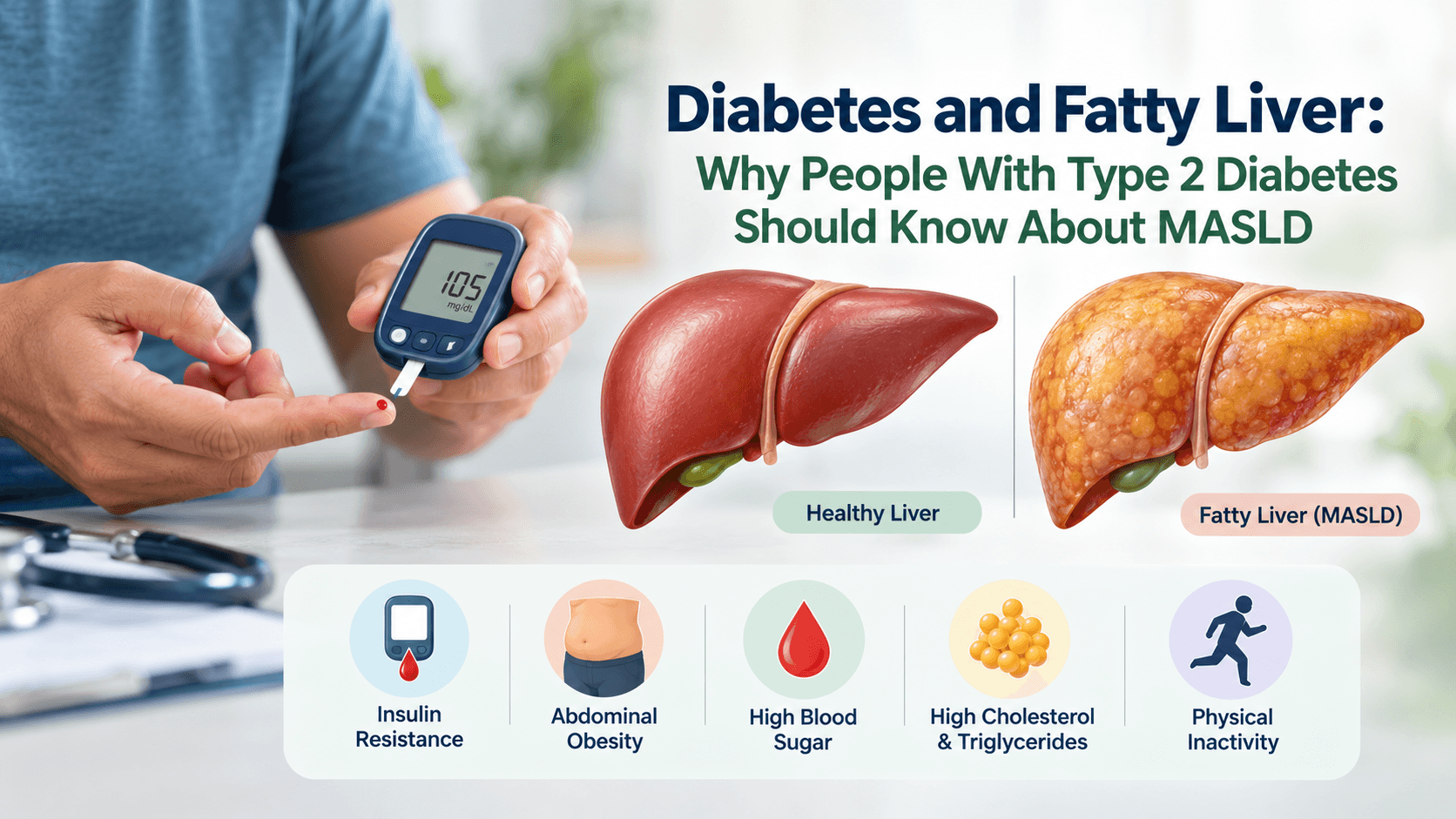
Diabetes and Fatty Liver: Why People With Type 2 Diabetes Should Know About MASLD
Quest Diabetic Clinic | Diabetes Awareness & Liver Health
Introduction
When we think about type 2 diabetes, high blood sugar, insulin resistance and heart disease are often the first health concerns that come to mind. However, there is another condition that deserves attention: fatty liver disease, now known as Metabolic Dysfunction-Associated Steatotic Liver Disease (MASLD).
MASLD is a common metabolic condition in which excess fat accumulates in the liver. It is particularly prevalent among people with type 2 diabetes, obesity and insulin resistance. What makes this condition concerning is that it often develops silently, without noticeable symptoms, and may gradually progress to liver inflammation, scarring and serious liver damage in some individuals.
Understanding the connection between diabetes and fatty liver is essential for protecting long-term health. With early detection, appropriate medical care and sustainable lifestyle changes, it is possible to improve liver health and reduce the risk of complications.
What Is MASLD?
Metabolic Dysfunction-Associated Steatotic Liver Disease (MASLD), previously known as Non-Alcoholic Fatty Liver Disease (NAFLD), occurs when excess fat builds up in the liver in association with one or more metabolic risk factors, such as type 2 diabetes, obesity, high blood pressure or abnormal cholesterol levels.
The liver plays a vital role in regulating blood sugar, processing fats, storing nutrients and removing harmful substances from the body. When excessive fat accumulates in liver cells, it can interfere with normal metabolic functions and, in some cases, trigger inflammation and liver damage.
MASLD can range from simple fat accumulation in the liver to more serious conditions. When fat accumulation is accompanied by inflammation and liver cell injury, the condition is known as Metabolic Dysfunction-Associated Steatohepatitis (MASH). Over time, persistent liver injury may lead to fibrosis (scarring), cirrhosis and, in some cases, liver failure or liver cancer.
Not everyone with MASLD develops advanced liver disease. However, people with type 2 diabetes have a higher risk of developing more severe forms of the condition.
Why Are People With Type 2 Diabetes at Higher Risk?
The connection between type 2 diabetes and fatty liver is largely driven by insulin resistance. When the body becomes resistant to insulin, it cannot regulate blood glucose and fat metabolism effectively. This can increase fat delivery to the liver and stimulate fat production within liver cells, leading to excessive fat accumulation.
Several factors contribute to this increased risk.
Insulin resistance: Insulin resistance is a key feature of type 2 diabetes. It affects how the body processes glucose and fats, increasing the likelihood of excess fat accumulating in the liver.
Abdominal obesity: Excess fat around the abdomen, particularly visceral fat stored around internal organs, can release fatty acids and inflammatory substances that contribute to insulin resistance and fatty liver.
Poor blood sugar control: Persistently elevated blood glucose is associated with metabolic disturbances that can contribute to liver fat accumulation and increase the risk of more advanced liver disease.
High cholesterol and triglycerides: Abnormal lipid levels are common in people with type 2 diabetes. Elevated triglycerides and other metabolic abnormalities can contribute to excess fat accumulation in the liver.
Physical inactivity: A sedentary lifestyle can worsen insulin resistance, contribute to weight gain and increase the risk of developing MASLD.
These factors often occur together, creating a cycle of metabolic dysfunction that can affect both blood glucose regulation and liver health.
What Are the Symptoms of Fatty Liver Disease?
One of the biggest challenges with MASLD is that it often has no noticeable symptoms, particularly during its early stages. Many people discover they have fatty liver during routine blood tests or an abdominal ultrasound performed for another reason.
Some individuals may experience persistent fatigue, general weakness or vague discomfort in the upper-right part of the abdomen. However, these symptoms are not specific to fatty liver and can be associated with several other conditions.
As liver disease progresses to advanced fibrosis or cirrhosis, more serious symptoms may develop, including yellowing of the skin or eyes, swelling in the abdomen or legs, easy bruising and confusion.
The absence of symptoms does not necessarily mean that the liver is healthy. People with type 2 diabetes can have significant liver fibrosis without experiencing any obvious warning signs. This makes appropriate risk assessment and medical evaluation especially important.
How Is MASLD Diagnosed?
MASLD is diagnosed through a combination of medical history, metabolic risk assessment, blood tests and imaging where appropriate.
Doctors may recommend liver function tests, including ALT and AST, to identify signs of liver injury. However, normal liver enzyme levels do not always rule out fatty liver or significant liver fibrosis.
An abdominal ultrasound can help detect excess fat in the liver, although it cannot reliably determine the extent of liver scarring.
Another useful investigation is FibroScan, a non-invasive test that measures liver stiffness to estimate the risk of fibrosis. It can also assess liver fat.
Doctors may also use the FIB-4 score, which is calculated using age, AST, ALT and platelet count. This helps identify people who may be at increased risk of advanced liver fibrosis and require further assessment.
People with type 2 diabetes should discuss their risk of liver fibrosis with their healthcare professional, even if they feel well or have normal liver enzyme levels.
Can Fatty Liver Disease Be Reversed?
The good news is that MASLD can often be improved, especially when identified early. Lifestyle changes, effective diabetes management and appropriate medical care can help reduce liver fat, improve metabolic health and, in some individuals, improve liver inflammation and fibrosis.
Maintain a healthy weight: For people who are overweight or obese, gradual and sustained weight loss can significantly reduce liver fat. Greater weight loss may be needed to improve inflammation and fibrosis. Weight management should be approached safely and with appropriate professional guidance.
Follow a balanced diet: A nutritious diet containing vegetables, whole fruits, whole grains, pulses, lean proteins, nuts and healthy fats can support blood glucose control and liver health. Limiting sugary beverages, sweets, refined carbohydrates, deep-fried foods and highly processed snacks is also important.
Exercise regularly: Physical activity improves insulin sensitivity, supports weight management and can reduce liver fat, even without significant weight loss. Brisk walking, cycling, swimming and strength training are useful options. Adults should generally aim for at least 150 minutes of moderate-intensity physical activity per week, depending on their health and physical ability.
Manage blood sugar levels: Keeping blood glucose within individualized targets is an essential part of managing type 2 diabetes and reducing metabolic complications. Doctors may recommend specific medications based on a person's diabetes control, weight, cardiovascular health, kidney function and liver condition.
Avoid harmful alcohol consumption: Alcohol can contribute to liver injury and complicate the management of fatty liver disease. People with MASLD should discuss alcohol intake with their doctor, particularly if there is evidence of liver inflammation or fibrosis.
What Happens If Fatty Liver Is Left Untreated?
Although MASLD does not progress to severe liver disease in everyone, some individuals may develop progressive liver damage over time.
Persistent inflammation can lead to fibrosis, where scar tissue develops in the liver. Advanced fibrosis may progress to cirrhosis, which can interfere with normal liver function and increase the risk of liver failure and liver cancer.
MASLD is also closely associated with cardiovascular disease. People with type 2 diabetes and fatty liver often have other metabolic risk factors, including high blood pressure, abnormal cholesterol and obesity, which can increase the risk of heart attack and stroke.
This is why managing fatty liver should be part of a comprehensive approach to diabetes care, rather than focusing on blood glucose alone.
Who Should Get Checked for Fatty Liver?
People living with type 2 diabetes should discuss liver health during their routine medical appointments. Assessment may be particularly important for individuals who also have abdominal obesity, high triglycerides, high blood pressure, persistently elevated liver enzymes or a previous diagnosis of fatty liver.
Importantly, MASLD can also affect people who are not overweight. Body weight alone is not sufficient to determine whether someone is at risk.
A healthcare professional can assess individual risk and decide whether blood tests, a FIB-4 score, ultrasound, FibroScan or referral to a liver specialist is appropriate.
How Can People With Diabetes Protect Their Liver Health?
Protecting liver health requires consistent attention to overall metabolic well-being. People with type 2 diabetes can take several practical steps:
Monitor blood glucose and follow the prescribed diabetes treatment plan.
Maintain a healthy weight through sustainable lifestyle changes.
Follow a balanced diet with appropriate portion sizes.
Stay physically active and reduce prolonged sitting.
Monitor blood pressure and cholesterol levels.
Attend regular medical check-ups and discuss liver fibrosis risk.
Avoid unverified supplements and products marketed as liver detox treatments.
There is no single food, supplement or detox product that can replace evidence-based medical care and sustainable lifestyle changes. Individualized guidance from a doctor and dietitian can help people make appropriate decisions for their health.
Conclusion
Diabetes and fatty liver disease are closely connected through insulin resistance, excess fat accumulation and metabolic dysfunction. Since MASLD often develops without obvious symptoms, it can remain undetected until significant liver damage has occurred.
For people with type 2 diabetes, taking care of liver health is just as important as managing blood glucose, cholesterol and blood pressure. Early risk assessment, appropriate medical care, a balanced diet, regular exercise and sustained weight management can make a meaningful difference.
If you are living with type 2 diabetes, do not focus on blood sugar alone. Talk to your doctor about your liver health and take timely steps to reduce the risk of complications.
Book an Appointment
Dr. Sayanti Banerjee
Consultant Physician & Diabetologist
Quest Diabetic Clinic & Diagnostic CentreShankar Plaza, 1st FloorOpposite Idgha High SchoolMurgasol, Asansol – 713303
Phone: 8972775902 / 8016200778
Website: www.questdiabeticclinic.com