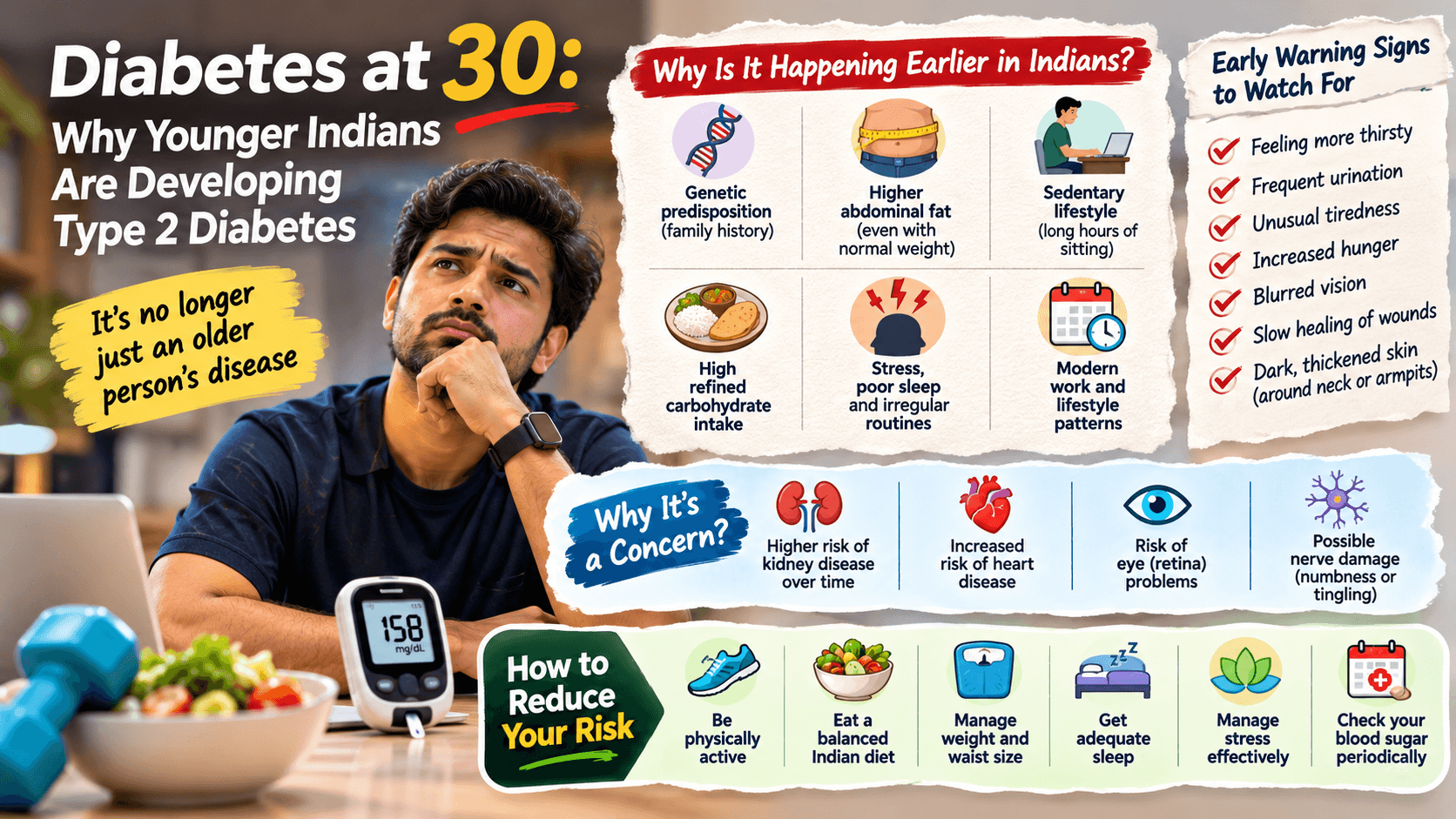
Diabetes at 30: Why Younger Indians Are Developing Type 2 Diabetes
Type 2 diabetes was once commonly associated with middle age and older adults. Today, however, many Indians are being diagnosed in their 20s and 30s. Some are discovering that their blood sugar levels are already elevated during routine health check-ups, while others receive a diagnosis after experiencing symptoms such as excessive thirst, frequent urination, tiredness or unexplained weight changes.
This shift is concerning because developing diabetes at a younger age means potentially living with the condition for a longer period. Without early detection and proper management, the risk of complications involving the heart, kidneys, eyes and nerves can increase over time.
So why are more younger Indians developing type 2 diabetes? Is it only because of eating habits, or are genetics, stress, sleep and lifestyle also involved?
Let's understand the reasons and what can be done to reduce the risk.
1. Why Is Type 2 Diabetes Appearing at a Younger Age?
Type 2 diabetes develops when the body becomes less responsive to insulin (insulin resistance) and the pancreas cannot produce enough insulin to maintain normal blood glucose levels.
Several factors may contribute to its earlier development in Indians:
- Genetic and family history.
- Excess abdominal fat, even when overall body weight appears normal.
- Reduced physical activity.
- Diets high in refined carbohydrates and calories.
- Poor sleep and chronic stress.
- Increasingly sedentary work and lifestyle patterns.
These factors often overlap. A person may have a genetic tendency towards diabetes, while lifestyle factors accelerate its development.
2. The Indian Body Composition Factor: Diabetes Risk Even Without Obesity
One important reason diabetes can develop at a younger age in Indians is that BMI alone does not always reflect metabolic risk.
Some Indians develop insulin resistance and excess abdominal fat even when their overall body weight is not particularly high.
This is sometimes described as the Asian Indian phenotype.
People may have:
- More abdominal or visceral fat.
- Lower muscle mass relative to body fat.
- A greater tendency towards insulin resistance.
- Increased risk of metabolic problems at comparatively lower BMI levels.
This means a person who looks slim may still have an increased risk of type 2 diabetes.
The waistline can matter as much as the weighing scale.
3. Sedentary Lifestyle: The Impact of Sitting for Long Hours
Many younger Indians work in IT, corporate offices, business operations and other desk-based jobs.
A typical day may involve:
- Sitting for 8–10 hours at work.
- Long commutes.
- Limited walking or exercise.
- Spending additional hours on mobile phones, laptops or television.
- Irregular meal timings.
Muscles play an important role in using glucose from the bloodstream. When physical activity is low, the body may become less effective at using insulin.
Even people who exercise occasionally may benefit from reducing uninterrupted sitting throughout the day.
4. Indian Food Habits and Hidden Excess Carbohydrates
Traditional Indian meals can be nutritious and balanced. However, portion sizes, food combinations and preparation methods can influence blood glucose.
Common dietary patterns that may increase diabetes risk include:
- Large portions of white rice.
- Excessive consumption of refined flour products.
- Frequent sweets, desserts and sugary drinks.
- Regular consumption of packaged snacks and bakery products.
- Meals with limited vegetables, fibre and protein.
- Frequent overeating and late-night snacking.
Foods such as rice, roti, dosa, idli and poha do not automatically cause diabetes. The overall dietary pattern, portion size, preparation and individual metabolic response matter.
A balanced meal with vegetables, adequate protein, fibre and appropriate carbohydrate portions can support better glucose management.
5. Stress, Sleep Deprivation and Irregular Work Schedules
Modern work patterns can affect metabolic health in several ways.
Long working hours, deadlines, financial pressure and family responsibilities may contribute to chronic stress.
Poor sleep and irregular schedules can also affect hormones involved in appetite and glucose regulation.
Potential consequences include:
- Increased appetite and food cravings.
- Reduced physical activity.
- Changes in insulin sensitivity.
- Weight gain over time.
- Difficulty maintaining healthy routines.
Stress alone does not directly explain every case of diabetes, but it can contribute to an unhealthy metabolic environment when combined with other risk factors.
6. Family History: Can Diabetes Be Genetic?
Yes. Genetics plays an important role in type 2 diabetes risk.
If one or both parents have type 2 diabetes, a person may have a higher likelihood of developing the condition.
However, family history does not mean diabetes is inevitable.
Lifestyle factors such as regular exercise, healthy eating, maintaining a suitable waist circumference and getting adequate sleep can help reduce risk.
Younger adults with a strong family history should be particularly mindful of screening rather than waiting for symptoms.
7. Why Is Early-Onset Diabetes a Concern?
A diagnosis at 30 or 35 means a person may live with diabetes for several decades.
Longer exposure to elevated blood glucose can increase the cumulative risk of complications, particularly when blood sugar remains poorly controlled.
Possible complications include:
Heart and blood vessels: Increased risk of cardiovascular disease.
Kidneys: Damage to the kidney's filtering units, potentially leading to chronic kidney disease.
Eyes: Diabetic retinopathy, which can affect vision.
Nerves: Neuropathy, which may cause tingling, numbness, burning sensations or loss of sensation.
Feet: Reduced sensation and poor circulation can increase the risk of foot ulcers and infections.
The important message is not to create fear. It is to recognise that early diagnosis provides more time to manage risk factors and protect long-term health.
8. What Are the Warning Signs of Diabetes at a Young Age?
Type 2 diabetes can develop gradually, and some people have no obvious symptoms in the early stages.
Possible warning signs include:
Feeling thirsty more frequently than usual.
Passing urine frequently, including at night.
Feeling unusually tired.
Increased hunger.
Blurred vision.
Slow healing of cuts or wounds.
Recurrent skin or fungal infections.
Dark, thickened skin around the neck, armpits or groin (acanthosis nigricans), which can be associated with insulin resistance.
Do not wait for these symptoms to appear. Screening is especially important if you have a family history or other risk factors.
9. When Should Younger Adults Get Tested?
Diabetes screening should not be limited to people above 40.
Consider discussing testing with your doctor if you are in your 20s or 30s and have:
A parent or sibling with type 2 diabetes.
Excess abdominal fat or overweight.
High blood pressure.
Abnormal cholesterol or triglyceride levels.
A history of gestational diabetes or polycystic ovary syndrome (PCOS).
A sedentary lifestyle combined with other risk factors.
Common tests include:
Test
What it checks
Fasting blood glucose
Blood sugar after an overnight fast
HbA1c
Average blood glucose over approximately 2–3 months
Oral glucose tolerance test (OGTT)
How the body handles a glucose drink
For reference, commonly used diagnostic thresholds for non-pregnant adults are:
HbA1c: 5.7–6.4% indicates prediabetes; 6.5% or higher is in the diabetes range.
Fasting plasma glucose: 100–125 mg/dL indicates prediabetes; 126 mg/dL or higher is in the diabetes range.
Two-hour OGTT: 140–199 mg/dL indicates prediabetes; 200 mg/dL or higher is in the diabetes range.
Unless there are clear symptoms with unequivocal high blood glucose, a diabetes-range result generally needs confirmation with repeat testing.
10. How Can You Reduce Your Risk of Diabetes at 30?
The good news is that many risk factors can be improved. Small, consistent changes are more sustainable than extreme diets or sudden exercise routines.
1. Reduce abdominal fat
If you have excess weight, even modest, sustained weight loss can improve insulin sensitivity. Focus on waist circumference and overall health, not only the number on the weighing scale.
2. Walk every day
Aim for at least 150 minutes of moderate-intensity physical activity each week, if appropriate for your health. Brisk walking, cycling, swimming and dancing are useful options.
3. Include strength exercises
Strength training helps maintain and build muscle, which plays an important role in glucose use. Start gradually and increase activity according to your fitness level.
4. Balance your Indian meals
Try to include vegetables, pulses, protein sources and appropriate portions of rice, roti or other carbohydrates. Reduce sugary drinks and frequent highly processed snacks.
5. Avoid prolonged sitting
Take short movement breaks during desk work. A brief walk after meals can also help reduce post-meal glucose levels.
6. Prioritise sleep
Aim for a regular sleep schedule and sufficient sleep. Address persistent snoring, poor sleep quality or possible sleep apnoea with a healthcare professional.
7. Manage stress
Regular activity, relaxation practices, social support and a realistic work-life routine can help you maintain healthier habits.
8. Check your health periodically
Monitor blood pressure, glucose and cholesterol as recommended by your healthcare professional, particularly if diabetes runs in your family.
11. Can Prediabetes Be Reversed?
Prediabetes means blood glucose is higher than normal but has not reached the diabetes range.
For many people, timely lifestyle changes can bring glucose levels back into the normal range or delay progression to type 2 diabetes.
A structured prevention plan may include:
Sustainable weight management where needed.
Regular physical activity.
A balanced eating pattern.
Adequate sleep.
Periodic glucose monitoring.
Some people at particularly high risk may also benefit from medication, such as metformin, after an individual assessment by their doctor.
The earlier these changes begin, the more opportunity there may be to prevent or delay diabetes.
Conclusion: Do Not Assume You Are Too Young for Diabetes
Developing type 2 diabetes at 30 is not simply an older person's health problem appearing earlier. It reflects a combination of genetic susceptibility, body fat distribution, insulin resistance, diet, physical inactivity and other lifestyle and environmental factors.
Being young does not automatically protect you from diabetes. Equally, having a family history does not mean you are destined to develop it.
Know your risk, check your blood sugar when appropriate, stay physically active and take early warning signs seriously.
Book an Appointment
Dr. Sayanti Banerjee
Consultant Physician & Diabetologist
Quest Diabetic Clinic & Diagnostic CentreShankar Plaza, 1st FloorOpposite Idgha High SchoolMurgasol, Asansol – 713303
Phone: 8972775902 / 8016200778
Website: www.questdiabeticclinic.com