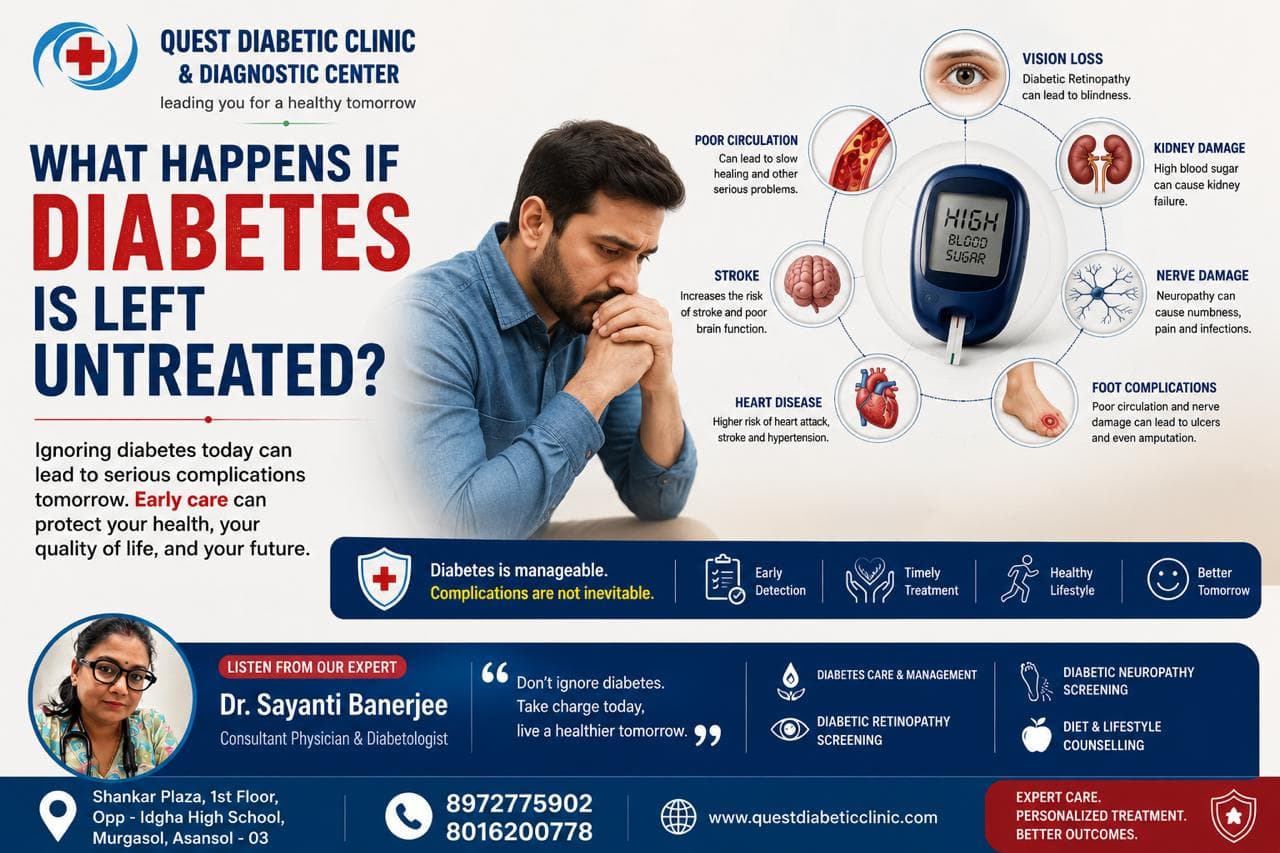
The Silent Threat: How Uncontrolled Diabetes Affects Your Body (And How to Stop It)
Diabetes is often called a "silent disease"—and for good reward. Serious internal damage can quietly occur long before you ever notice obvious symptoms. When blood sugar remains persistently high, it acts like a slow corrosive, affecting nearly every vital organ in the body.
But here is the good news: diabetes complications are not inevitable. With early diagnosis, proper medical care, a healthy diet, and regular monitoring, you can protect your body and live a long, vibrant life.
8 Ways High Blood Sugar Damages Your Body
When diabetes is left unmanaged, it targets both large and small blood vessels, leading to a chain reaction of health complications.
1. Vision Loss (Diabetic Retinopathy)
High blood sugar damages the microscopic blood vessels in the retina (the back of your eye). If left undetected, this can cause vision blurring, leaks, and eventually, irreversible blindness.
2. Kidney Failure (Diabetic Nephropathy)
Your kidneys act as the body's filtration system. Chronic high glucose forces them to overwork, damaging the delicate filters. Untreated diabetes is one of the leading global causes of chronic kidney disease and kidney failure.
3. Nerve Damage (Diabetic Neuropathy)
Have you ever felt a strange burning, numbness, tingling, or "pins and needles" sensation in your feet or hands? That is diabetic neuropathy. Over time, a total loss of sensation can develop, making it difficult to feel injuries.
4. Heart Attacks & Strokes
Diabetes dramatically escalates your risk for cardiovascular disease. People with uncontrolled blood sugar are at a significantly higher risk for accelerated plaque buildup in the arteries, high blood pressure, heart attacks, and strokes.
5. Diabetic Foot Complications
A dangerous combination of reduced blood flow and nerve damage makes the feet highly vulnerable. A tiny scratch or blister can quickly turn into a non-healing wound, leading to severe infection and, in worst-case scenarios, amputation.
6. Cognitive Decline & Brain Health
Your brain relies heavily on stable glucose levels. Chronic hyperglycemia (high blood sugar) has been linked to memory problems, accelerated cognitive decline, and a higher risk of developing dementia later in life.
7. Fatty Liver Disease (MASLD)
Diabetes frequently coexists with Metabolic Dysfunction-Associated Steatotic Liver Disease (MASLD). This excess fat buildup in the liver can lead to inflammation and long-term liver scarring (cirrhosis).
8. Frequent Infections
High sugar levels impair your immune system's ability to fight off invaders. As a result, individuals with unmanaged diabetes experience recurrent skin, urinary tract (UTIs), and fungal infections.
Red Flags: Early Warning Signs You Should Never Ignore
Your body usually sends out subtle distress signals when blood sugar levels are spiking. Keep a close eye out for:
- Excessive thirst and unusually frequent urination
- Sudden blurred vision
- Unexplained, rapid weight loss
- Cuts, bruises, or sores that are slow to heal
- Numbness, tingling, or pain in your hands or feet
- Chronic, persistent fatigue despite resting
- Repeated skin or urinary tract infections
Your Action Plan: How to Prevent Diabetes Complications
Preventing the progression of diabetes comes down to consistent daily habits and proactive medical screening.
- Know Your Numbers: Test your HbA1c regularly to track your 3-month average, and monitor daily blood sugar levels consistently.
- Prioritize Lifestyle: Adopt a balanced, nutrient-dense diet and commit to regular physical activity.
- Manage the Triad: Keep your blood sugar, blood pressure, and cholesterol all within target ranges.
- Schedule Annual Screenings: Don't wait for symptoms. Get yearly professional eye, kidney, and foot check-ups.
- Ditch the Habits: Avoid smoking entirely and strictly limit alcohol consumption.
- Partner with an Expert: Maintain regular consultations with your diabetologist to adjust your treatment plan as needed.
Frequently Asked Questions (FAQs)
Can untreated diabetes shorten life expectancy?
Yes. Chronic uncontrolled diabetes significantly increases the risk of life-threatening events like heart disease, stroke, kidney failure, and severe systemic infections.
Can diabetes damage the brain?
Yes. Poorly controlled blood sugar levels can negatively impact brain health, contributing to memory impairment and cognitive decline over time.
Can diabetes complications be prevented?
Absolutely. The vast majority of complications can be significantly delayed or entirely prevented with early diagnosis, early intervention, and tight glucose control.
How often should HbA1c be checked?
For most patients, it is recommended to test HbA1c every 3 months. However, your doctor may adjust this schedule based on how well your blood sugar is managed.
Take Control of Your Health Today
Comprehensive diabetes care requires a team effort. If you are in the Asansol region, Quest Diabetic Clinic & Diagnostic Centre offers end-to-end management under the expert guidance of Dr. Sayanti Banerjee (Consultant Physician & Diabetologist).
From advanced diagnostic testing like HbA1c and Continuous Glucose Monitoring (CGM) to specialized screenings for retinopathy, neuropathy, thyroid evaluation, and personalized diet counseling, we provide everything you need under one roof.
Book Your Consultation
- Expert: Dr. Sayanti Banerjee (Consultant Physician & Diabetologist)
- Clinic: Quest Diabetic Clinic & Diagnostic Centre
- Address: Shankar Plaza, 1st Floor, Opp. Idgha High School, Murgasol, Asansol – 713303
- Phone: 8972775902 / 8016200778
- Website: www.questdiabeticclinic.com