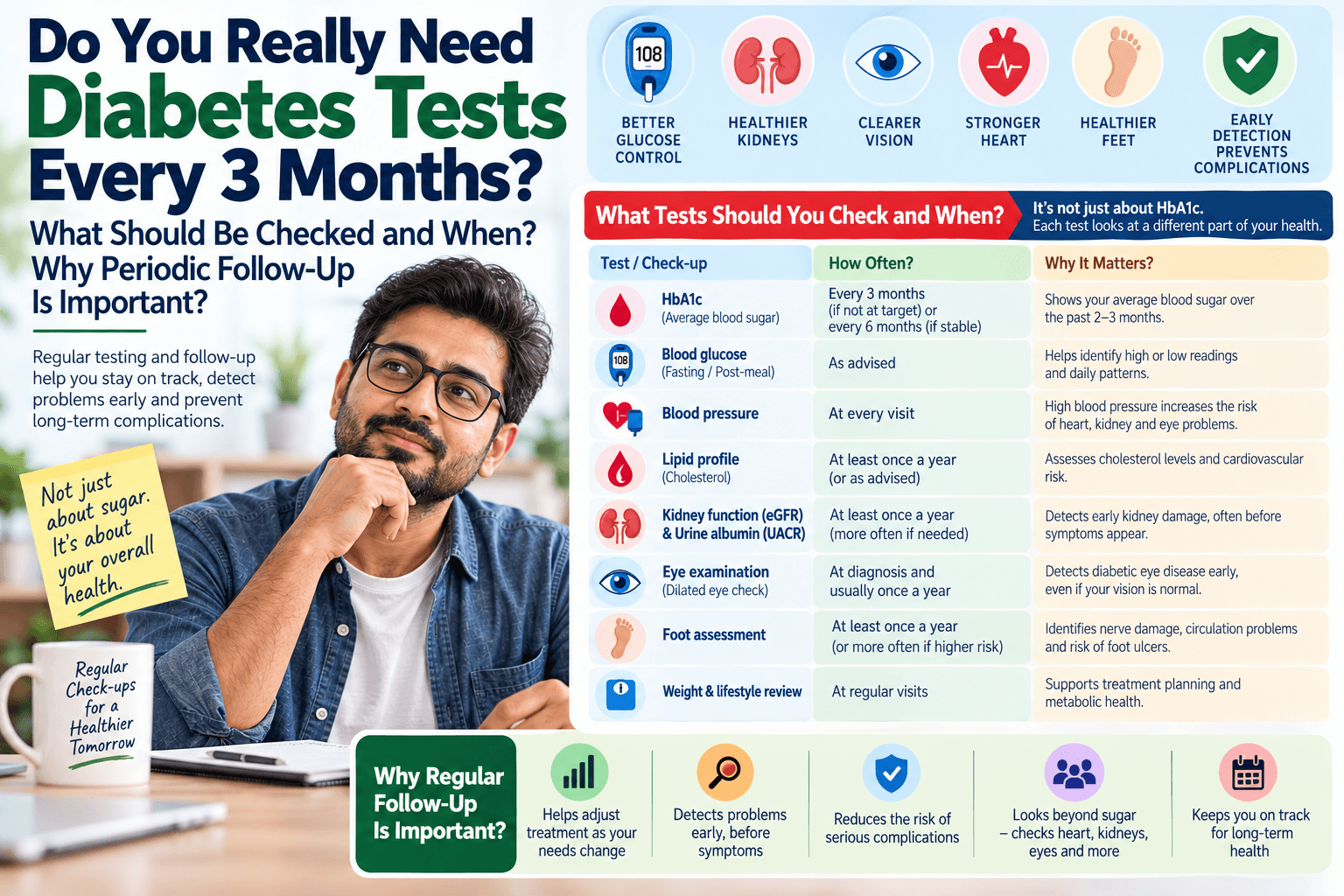
Do You Really Need Diabetes Tests Every 3 Months? What Should Be Checked and When? Why Periodic Follow-Up Is Important
Managing diabetes is not just about taking medicines every day or checking your blood sugar when you feel unwell. It is also about understanding how your body is responding to treatment and identifying potential problems before they become serious.
Many people with Type 2 diabetes have questions about follow-up appointments. If their blood sugar readings appear normal, do they still need regular tests? Is an HbA1c test every three months necessary? And why do doctors recommend checking the kidneys, eyes, cholesterol, and blood pressure even when there are no obvious symptoms?
The answer is that diabetes follow-up is about much more than blood sugar. It is about protecting your long-term health.
However, not every test needs to be repeated every three months. The appropriate schedule depends on your glucose control, treatment changes, diabetes duration, other medical conditions, and individual risk factors.
Let's understand which tests matter, how frequently they may be needed, and why regular follow-up can make a meaningful difference.
1. Why Is Regular Diabetes Follow-Up Important?
Type 2 diabetes is a long-term condition that can change over time.
Your glucose levels may improve after starting treatment, but they can also rise again because of changes in insulin production, insulin resistance, lifestyle, other medicines, or illness.
At the same time, high blood glucose can gradually affect the blood vessels, kidneys, eyes, and nerves. High blood pressure and abnormal cholesterol can further increase the risk of cardiovascular complications.
One challenge is that these changes may develop without noticeable symptoms.
Regular follow-up helps your healthcare team:
- Assess whether your diabetes treatment is working.
- Identify persistently high or unexpectedly low glucose levels.
- Review whether medicines need adjustment.
- Monitor kidney function and cardiovascular risk.
- Detect eye and foot problems early.
- Check for other health conditions associated with diabetes.
- Support sustainable changes in nutrition, physical activity, and daily habits.
The goal is not simply to collect test reports. It is to use the information to guide decisions that protect your health over time.
2. Do You Really Need an HbA1c Test Every Three Months?
HbA1c is one of the most useful tests for monitoring diabetes.
Unlike a single fasting glucose measurement, which shows your blood sugar at a particular moment, HbA1c estimates your average blood glucose over approximately the previous two to three months.
It helps your doctor understand your overall glucose control rather than relying on a few individual readings.
When should HbA1c be checked?
For many people with diabetes, the general approach is:
- Approximately every three months: When treatment has recently changed, glucose levels are above the individual's target, or closer monitoring is needed.
- Approximately every six months: When glucose levels are stable and treatment goals are being consistently met.
These are common intervals, not rigid rules. Your doctor may recommend a different schedule depending on your circumstances.
Why can an HbA1c test change your treatment plan?
Suppose your fasting glucose readings usually look acceptable, but your HbA1c has increased.
This may indicate that glucose is rising at other times, such as after meals or overnight.
Your doctor may then review your medication, eating patterns, activity levels, or glucose monitoring schedule to understand what is happening.
An HbA1c test provides a broader picture of glucose control than an isolated blood sugar reading.
It is also important to remember that HbA1c can be affected by certain conditions, including some types of anaemia and changes in red blood cells. Results should be interpreted alongside your clinical history and other glucose measurements when appropriate.
3. Which Diabetes Tests Should You Check, and How Often?
Not every diabetes-related test needs to be performed every three months. Each test serves a different purpose.
<text color="secondary" size="sm">The following table gives general guidance for many adults with Type 2 diabetes. Your doctor may adjust the schedule based on your health and risk factors.</text>
Test or assessment
Common monitoring frequency
Why it matters
HbA1c
Every 3 months if not at target or after treatment changes; every 6 months if stable
Assesses average glucose control
Blood glucose
As advised; frequency depends on medication and individual needs
Helps identify high or low readings
Blood pressure
At routine clinical visits
Assesses cardiovascular and kidney risk
Lipid profile
Usually at least annually, with timing adjusted to treatment and risk
Assesses cholesterol and cardiovascular risk
Kidney function (eGFR)
At least annually; more often with kidney disease or higher risk
Assesses how well the kidneys filter blood
Urine albumin-to-creatinine ratio (UACR)
At least annually in Type 2 diabetes; more often when indicated
Detects increased urinary albumin, an early sign of kidney damage
Comprehensive eye examination
At diagnosis and generally annually; intervals may be extended in selected low-risk cases
Detects diabetic eye disease
Foot assessment
At least annually, with more frequent checks for higher-risk feet
Identifies nerve damage, circulation problems, and ulcers
Weight and lifestyle review
Periodically, often at routine visits
Supports treatment planning and metabolic health
The frequency shown is a general guide, not a requirement for every person. For example, someone with established kidney disease may need kidney tests more frequently, while some people with consistently normal eye examinations may qualify for a longer interval between examinations.
4. Why Should You Check Your Kidneys Even If You Feel Fine?
Diabetes can damage the small blood vessels in the kidneys over time. This can lead to chronic kidney disease, sometimes without obvious symptoms during the early stages.
Two important assessments are:
eGFR (estimated glomerular filtration rate): Estimates how effectively your kidneys filter waste from your blood.
UACR (urine albumin-to-creatinine ratio): Measures the amount of albumin, a protein, in your urine relative to creatinine. Increased urinary albumin can indicate kidney damage.
For people with Type 2 diabetes, both are generally recommended at least annually.
If abnormalities are detected, your doctor may recommend additional testing, closer monitoring, or treatment to protect kidney function.
Early detection matters because appropriate treatment can help slow the progression of kidney disease.
5. Why Are Eye Examinations Necessary When Your Vision Is Normal?
Diabetic retinopathy occurs when diabetes damages the blood vessels in the retina, the light-sensitive tissue at the back of the eye.
In its early stages, diabetic retinopathy may not cause noticeable changes in vision.
This means that waiting until your eyesight becomes blurry is not a reliable way to detect the condition.
People with Type 2 diabetes should generally have a comprehensive dilated eye examination at the time of diagnosis. Follow-up is usually annual, although an eye-care professional may recommend longer intervals for selected people with consistently normal examinations and good glucose control.
If retinopathy is present, more frequent examinations may be necessary.
Regular eye screening helps identify changes early, when appropriate management can help protect vision.
6. Why Should Cholesterol and Blood Pressure Be Monitored Alongside Sugar?
Many people focus exclusively on glucose when thinking about diabetes.
However, cardiovascular risk is influenced by several factors, including blood pressure, cholesterol, smoking, kidney health, and other individual characteristics.
High blood pressure can damage blood vessels and increase the risk of heart disease, stroke, and kidney complications.
Elevated LDL cholesterol can contribute to the development of plaque in arteries, increasing cardiovascular risk.
Your doctor may therefore assess blood pressure at routine visits and review your lipid profile according to your treatment plan.
For some people, cholesterol-lowering medication may be recommended even when glucose control is good, because reducing cardiovascular risk is a separate and important treatment goal.
Good diabetes management means looking beyond glucose to protect your heart and blood vessels.
7. Why Are Foot Examinations Important?
Diabetes can affect both the nerves and circulation in your feet.
Nerve damage may reduce sensation, making it harder to notice a blister, cut, burn, or pressure injury. Circulation problems can slow healing and increase the risk of complications.
A foot examination may include checking:
- Skin condition and the presence of wounds.
- Foot shape and areas of abnormal pressure.
- Sensation and signs of peripheral neuropathy.
- Circulation and pulses in the feet.
- Footwear and factors that increase ulcer risk.
A comprehensive foot assessment is generally recommended at least annually, with more frequent professional assessment for people with neuropathy, peripheral artery disease, previous ulcers, or other high-risk features.
It is also useful to look at your feet regularly at home, particularly if you have reduced sensation.
A new wound, spreading redness, swelling, or signs of infection should be assessed promptly rather than waiting for your next scheduled appointment.
8. What If Your Blood Sugar Is Normal? Can You Skip Follow-Up?
This is a common misconception.
If your glucose levels are consistently within your target range, that is encouraging. However, it does not automatically mean that all aspects of your diabetes care are complete.
Some people have good glucose control but still need monitoring for kidney disease, abnormal cholesterol, eye disease, or foot complications.
Others may have normal glucose readings because their medicines are working effectively. Stopping treatment or monitoring without appropriate guidance could allow glucose levels to rise again.
Follow-up appointments also provide an opportunity to review medication side effects, treatment adherence, lifestyle habits, vaccinations where appropriate, and changes in your overall health.
Normal readings are a reason to continue a successful plan—not a reason to abandon follow-up.
9. Can Too Many Tests Be Unnecessary?
Yes. Diabetes care should be individualized rather than based on repeating every available test at every visit.
For example, an HbA1c test every three months may be useful when glucose control is changing, but it may not be necessary at that frequency for someone whose diabetes is stable and consistently at target.
Similarly, kidney function tests may need to be performed more frequently when abnormalities are present, whereas some people with stable results can follow a routine annual schedule.
The objective is to perform the right tests at the right time.
Unnecessary testing can add cost and inconvenience without providing additional clinical benefit. On the other hand, skipping recommended screening can allow important problems to go undetected.
Ask your doctor which tests are due, which can wait, and why each one is recommended.
10. What Should You Discuss During Your Next Diabetes Appointment?
A useful diabetes follow-up should be more than a review of laboratory results.
Consider discussing the following questions with your healthcare team:
Is my latest HbA1c within my individual target?
Do my fasting and post-meal readings show any concerning patterns?
Is my current medication regimen still appropriate?
Are my kidney function and urine albumin results up to date?
When was my last comprehensive eye examination?
Are my blood pressure and cholesterol levels within the appropriate targets?
Do I need a foot assessment or closer monitoring for nerve damage?
Should I monitor my glucose more frequently or consider continuous glucose monitoring?
Have any new symptoms or medication side effects appeared?
When should I schedule my next follow-up and laboratory tests?
Keeping a record of your test results and medication list can make these discussions more productive.
Why Periodic Follow-Up Can Make a Difference Over the Long Term
Diabetes management is not a one-time intervention. Your body's needs, glucose patterns, medications, and risk factors can change over the years.
Regular follow-up allows those changes to be identified and addressed before they lead to more serious problems.
A rising HbA1c may indicate that treatment needs adjustment. Increased urine albumin may reveal early kidney damage. An eye examination may detect retinopathy before vision changes occur. A foot assessment may identify reduced sensation before an injury becomes serious.
Each assessment contributes a different piece of information.
Together, they help your healthcare team develop a more complete picture of your health and identify opportunities to reduce the risk of complications.
The Bottom Line
You may not need every diabetes test every three months, but you do need a follow-up schedule that matches your individual health needs.
HbA1c is often checked every three months when treatment changes or glucose control is not at target, and approximately every six months when diabetes is stable. Kidney function, urine albumin, cholesterol, eye health, and foot health require their own monitoring schedules.
The most important thing is not how many tests you complete. It is whether the right tests are being performed at the right time—and whether the results are being used to guide your care.
Don't wait for symptoms to appear before checking your diabetes health. Regular follow-up helps you stay informed, identify changes early, and protect your long-term wellbeing.
Book an Appointment
Dr. Sayanti Banerjee
Consultant Physician & Diabetologist
Quest Diabetic Clinic & Diagnostic CentreShankar Plaza, 1st FloorOpposite Idgha High SchoolMurgasol, Asansol – 713303
Phone: 8972775902 / 8016200778
Website: www.questdiabeticclinic.com