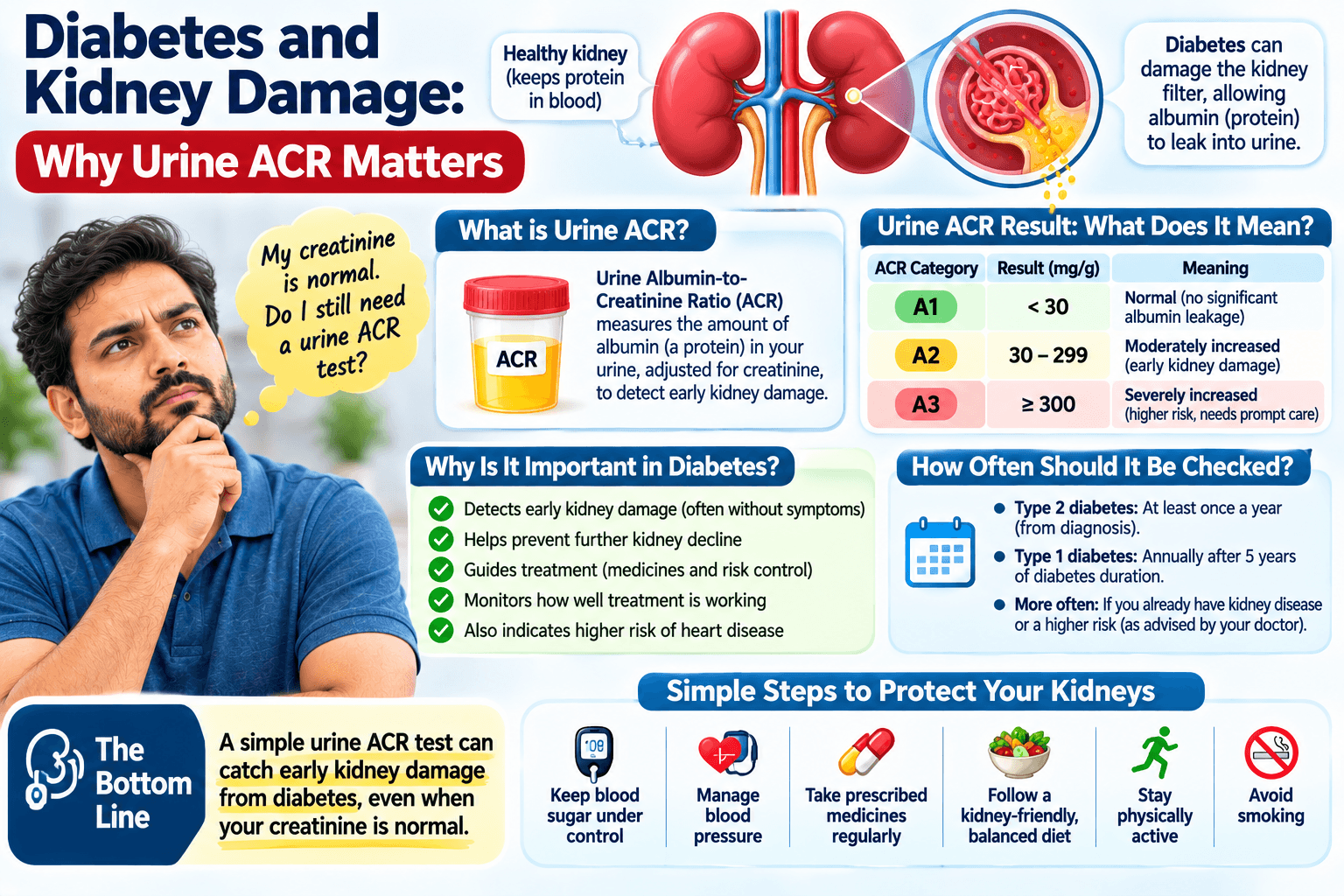
Diabetes and Kidney Damage: Why Urine ACR Matters
Diabetes can affect several organs over time, and the kidneys are among the most vulnerable. One of the biggest challenges with diabetes-related kidney damage is that it often develops silently. A person may feel perfectly healthy, have no pain or urinary symptoms, and still have early signs of kidney damage.
This is why a simple urine test called the Urine Albumin-to-Creatinine Ratio (ACR or UACR) is so important.
Unlike routine urine tests that may detect protein only when levels are higher, ACR can identify small amounts of albumin in the urine. Detecting this early can help doctors take steps to protect kidney function before more serious damage develops.
Let's understand what urine ACR measures, why people with diabetes need it, and how it helps protect long-term kidney health.
1. How Does Diabetes Affect the Kidneys?
Your kidneys act as natural filters. They remove waste products and excess fluid from the blood while keeping important substances, such as proteins, inside the bloodstream.
When blood glucose remains high for a long time, it can damage the tiny blood vessels and filtering structures inside the kidneys.
This can lead to:
- Damage to the kidney's filtering units.
- Leakage of albumin, a type of protein, into the urine.
- Gradual reduction in kidney filtering capacity.
- Chronic kidney disease (CKD) in some individuals.
- Kidney failure in advanced cases if the condition continues to progress.
High blood pressure can further increase the strain on these delicate filtering structures.
The important point is that kidney damage can begin even when a person feels well and routine blood tests appear relatively normal.
2. What Is Urine ACR?
ACR stands for Albumin-to-Creatinine Ratio.
It is a urine test that measures two things:
- Albumin: A protein normally found in the blood. Healthy kidneys generally prevent significant amounts from passing into the urine.
- Creatinine: A waste product that is released into the urine at a relatively steady rate. It helps account for how concentrated or diluted the urine sample is.
The test calculates the amount of albumin in relation to creatinine.
This makes ACR more reliable than measuring urine albumin alone, because urine concentration can vary depending on hydration.
A simple spot urine sample is usually sufficient. A 24-hour urine collection is generally not required for routine screening.
3. Why Is Urine ACR Important for People With Diabetes?
One of the earliest signs of diabetes-related kidney damage can be the presence of small amounts of albumin in the urine.
This is known as albuminuria.
ACR helps doctors:
Detect early kidney damage before obvious symptoms appear.
Identify people who may be at increased risk of kidney disease progression.
Monitor whether kidney damage is improving or worsening over time.
Assess the effectiveness of kidney-protective treatment.
Evaluate the risk of cardiovascular complications.
An important detail: ACR and eGFR provide different information. ACR looks for protein leakage, while eGFR estimates how effectively the kidneys filter blood. Both are needed for a more complete assessment.
4. What Do Different Urine ACR Results Mean?
Urine ACR results are generally divided into three categories.
ACR category
Result (mg/g)
Meaning
A1
Less than 30
Normal to mildly increased
A2
30–299
Moderately increased
A3
300 or higher
Severely increased
What does this mean?
- Below 30 mg/g: Generally reassuring, although it does not rule out every form of kidney disease.
- 30–299 mg/g: May indicate early kidney damage and needs clinical assessment.
- 300 mg/g or higher: Indicates a higher level of albumin leakage and requires further evaluation.
Some laboratories report ACR in mg/mmol instead of mg/g. Always interpret the result using the units and reference range printed on the laboratory report.
A single abnormal result does not automatically confirm chronic kidney disease. Doctors generally repeat testing because temporary factors can affect urine albumin levels. Persistent abnormalities over at least three months are important when assessing chronic kidney disease.
5. Can Kidney Damage Occur Even When Creatinine Is Normal?
Yes. This is one of the most important reasons not to rely only on blood creatinine results.
Consider this example:
A person with type 2 diabetes has:
- Blood creatinine: Within the laboratory's normal range.
- eGFR: 95 mL/min/1.73 m².
- Urine ACR: 85 mg/g.
Although the eGFR is reassuring, the ACR is elevated. This may indicate early kidney damage that needs confirmation and follow-up.
Kidney disease can be present even when eGFR is still above 60. In some people, albumin leakage appears before a noticeable decline in kidney filtering capacity.
Remember: A normal creatinine result does not always mean the kidneys are completely healthy.
6. Why Can Urine ACR Become Temporarily High?
An elevated ACR does not always mean permanent kidney damage.
Several temporary conditions can increase urine albumin, including:
- Recent strenuous exercise.
- Urinary tract infection.
- Fever or acute illness.
- Significantly elevated blood glucose.
- Uncontrolled blood pressure.
- Heart failure.
- Menstruation or blood contamination of the urine sample.
Your doctor may recommend repeating the test after these factors have settled.
For confirmation, current diabetes guidance generally recommends that two out of three urine samples collected over a period of 3–6 months be abnormal before classifying moderately or severely increased albuminuria as persistent.
7. What Other Kidney Tests Should People With Diabetes Check?
Urine ACR is important, but it should not be the only kidney test.
Two key measurements should be assessed together:
1. Urine ACR
- Detects albumin leakage.
- Helps identify early kidney damage.
- Helps monitor changes in albuminuria.
2. Serum Creatinine and eGFR
- Serum creatinine is measured through a blood test.
- eGFR estimates how effectively the kidneys filter waste from the blood.
- Helps assess kidney function and monitor disease progression.
Depending on the individual's condition, a doctor may also recommend:
- Blood pressure monitoring.
- Blood potassium and other electrolyte tests.
- Routine urine examination.
- Kidney ultrasound or additional investigations when indicated.
8. How Often Should People With Diabetes Get Urine ACR Tested?
Regular screening is important even when there are no symptoms.
Current American Diabetes Association guidance recommends:
- Type 2 diabetes: Check urine ACR and eGFR at least once a year, starting from diagnosis.
- Type 1 diabetes: Begin annual screening after five years of diabetes duration.
- Existing kidney disease: Testing may be needed more frequently, depending on kidney function, albumin levels, and the risk of progression.
Your doctor may adjust the frequency based on your previous results and overall health.
9. What Can You Do to Protect Your Kidneys?
Early detection gives people an opportunity to take steps that may slow kidney damage.
Some important measures include:
1. Keep blood sugar under control
Consistently high blood glucose can damage the kidney's filtering structures. Follow an individualized diabetes management plan.
2. Manage blood pressure
High blood pressure can accelerate kidney damage. Regular monitoring and appropriate treatment are important.
3. Take prescribed medicines regularly
Certain medicines, including ACE inhibitors, ARBs and SGLT2 inhibitors, can help protect kidney health in appropriate patients. The choice depends on blood pressure, kidney function, other conditions and individual suitability.
4. Avoid unnecessary painkillers
Frequent or prolonged use of certain painkillers, particularly NSAIDs such as ibuprofen and diclofenac, can affect kidney function. Discuss safer options with your doctor, especially if you already have kidney disease.
5. Follow a balanced diet
Limit excessive salt intake and follow a balanced eating plan. Protein requirements may need adjustment in people with established kidney disease, so avoid high-protein diets or supplements without professional guidance.
6. Stay physically active
Regular physical activity can support blood sugar, blood pressure and cardiovascular health.
7. Avoid smoking
Smoking can increase cardiovascular and kidney-related risks.
8. Attend regular follow-ups
Do not wait for symptoms before checking kidney health. Monitoring ACR and eGFR helps identify changes early.
10. Can Diabetes-Related Kidney Damage Be Reversed?
The outcome depends on how early the problem is detected and how much kidney damage has occurred.
When albumin levels are mildly elevated, addressing blood sugar, blood pressure and other risk factors may reduce albumin leakage in some people.
Even when chronic kidney disease is established, appropriate treatment can often slow its progression and reduce the risk of complications.
The goal is to identify kidney damage early, protect remaining kidney function and reduce the risk of progressing to advanced kidney disease.
Conclusion: A Simple Urine Test Can Help Protect Your Kidneys
Diabetes-related kidney damage often develops without noticeable symptoms. Waiting for swelling, changes in urination or abnormal creatinine results may mean missing an opportunity for early intervention.
Urine ACR is a simple but valuable test that can detect albumin leakage before significant kidney function loss becomes apparent.
If you are living with diabetes, make sure your regular kidney assessment includes both urine ACR and eGFR—not just blood creatinine.
A small urine sample, checked at the right time and followed up appropriately, can make an important difference to your long-term kidney health.
Book an Appointment
Dr. Sayanti Banerjee
Consultant Physician & Diabetologist
Quest Diabetic Clinic & Diagnostic CentreShankar Plaza, 1st FloorOpposite Idgha High SchoolMurgasol, Asansol – 713303
Phone: 8972775902 / 8016200778
Website: www.questdiabeticclinic.com